

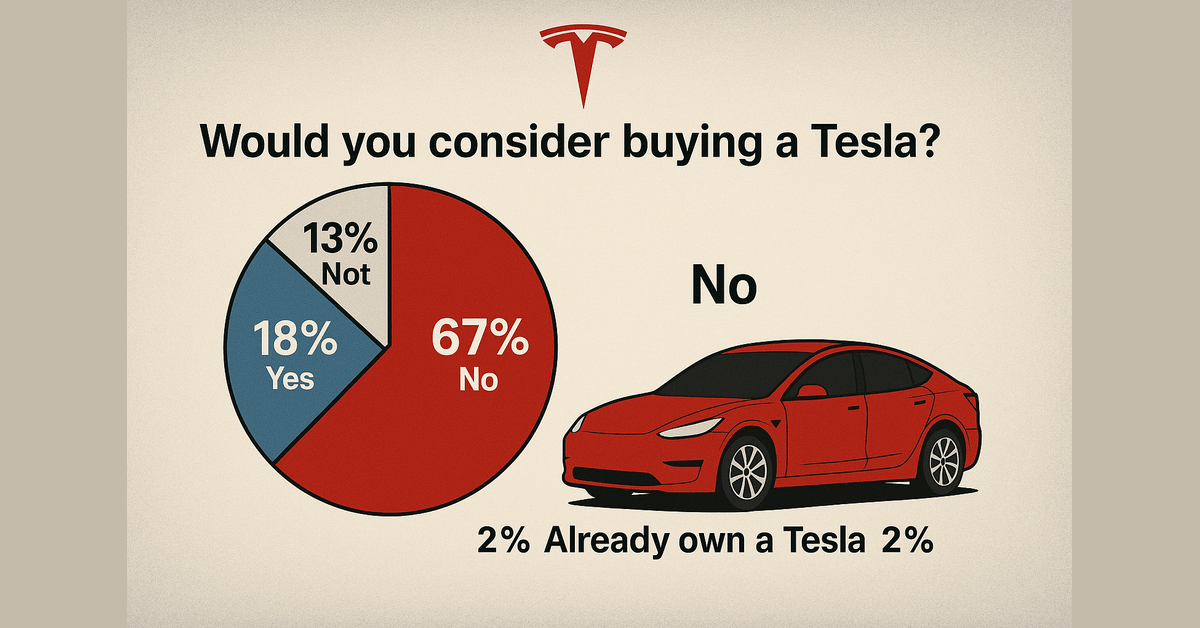
A recent poll conducted by YouGov and Yahoo News reveals that a significant 67% of Americans are not considering buying or leasing a Tesla vehicle. The survey, which involved 1,677 US adults and was carried out from March 20 to March 24, highlights a notable trend in public sentiment regarding electric vehicles from the well-known automaker.
Among those surveyed, a large portion expressed strong feelings about the brand, suggesting that perceptions of Elon Musk, Tesla’s CEO, play a critical role in shaping opinions. As the face of Tesla, Musk’s actions and statements have garnered both admirers and critics, which may contribute to the hesitance some consumers feel towards the brand.
This poll sheds light on broader attitudes towards electric vehicles in the United States, particularly how leadership and public personas can impact consumer decisions. Despite Tesla’s advancements and the growing interest in electric vehicles overall, a majority of Americans remain skeptical about purchasing a vehicle from the company.
Factors influencing the reluctance include concerns over vehicle reliability, customer service experiences, and the overall reputation of the brand. The interplay between product perception and celebrity influence continues to be a crucial element in the automotive market, particularly for innovative companies like Tesla.
Many respondents who indicated they would not consider purchasing a Tesla highlighted specific reasons for their reluctance. Confidence in the product’s reliability remains a significant concern; potential buyers fear that Tesla vehicles may not perform as well over time compared to traditional combustion engines. Reports of software glitches and quality control issues have contributed to a hesitation that is difficult to shake off, especially for customers who prioritize dependability in their automotive investments.
Additionally, customer service experiences appear to have left a lasting negative impression on some consumers. With the rise of electric vehicles, buyers often expect a certain level of support and service to accompany their purchase. Unfortunately for Tesla, reports of inconsistent customer service and long wait times for support have soured the perceptions of some who otherwise might have been interested in making a purchase. The contrast between the high-tech reputation of Tesla and the perceived lack of comprehensive service can create a disconnect that deters potential buyers.
Moreover, the Tesla brand itself is often linked to strong opinions about Elon Musk, who tends to dominate the conversation surrounding the company. Some potential customers feel uneasy about Musk’s public persona, with his controversial statements and business decisions casting a shadow over their perception of the brand. Critics argue that Musk’s unpredictable behavior can undermine consumer confidence in Tesla’s future and its leadership abilities.
In a broader context, the reluctance to buy Tesla vehicles may also reflect the difficulties electric vehicles face in gaining mass market acceptance. Even as more consumers consider the environmental benefits of EVs, the transition from traditional gasoline-powered cars is met with multiple barriers, including price, infrastructure for charging stations, and availability of competing models from established automakers. This creates a challenging landscape for Tesla amidst an evolving automotive market.
While some consumers may be enthusiastic about electric vehicles, Tesla specifically remains a polarizing choice. The combination of reliability concerns, customer service issues, and the controversial image of its CEO contributes to a significant number of potential buyers opting to look elsewhere. This complex array of factors suggests that while Tesla’s innovation is notable, its brand perception continues to face considerable headwinds in attracting a broader audience.
Click Here to read the full story
